Super-Hot Rock Geothermal Could Power AI Data Centers
Startups are developing advanced drilling techniques to tap ultra-deep, super-hot rock, providing massive amounts of continuous clean electricity for AI data centers.
The paper, point by point
The AI Power Crisis
Artificial intelligence searches require massive, round-the-clock power that the current electrical grid struggles to provide cleanly.
Super-Hot Rock Geothermal
Super-hot rock geothermal taps extreme subterranean heat located miles below the Earth's crust.

Supercritical Fluid Generation
Miles below the surface, extreme heat and pressure turn ordinary water into a supercritical fluid that carries tremendous energy.
High Energy Output
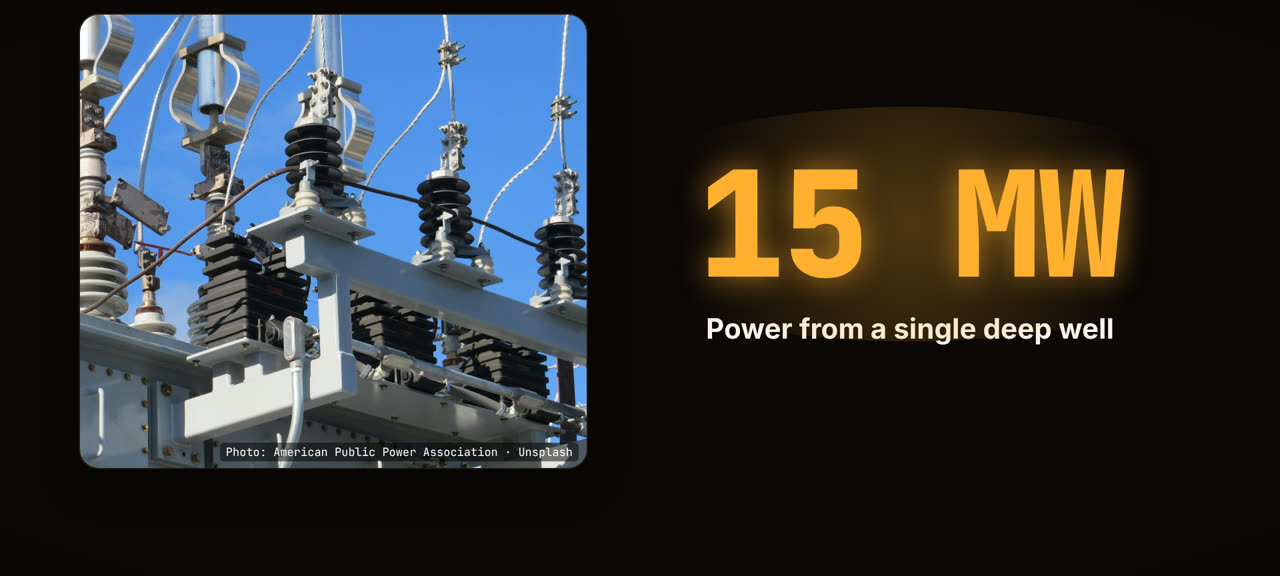
A single super-hot rock well can produce upwards of 15 megawatts of continuous electricity.
Major Tech Investments
Google committed over 500 million dollars for power from deep geothermal wells in Oregon.
Powering Data Centers
This technology provides clean, constant power directly to energy-hungry artificial intelligence data centers.
Watch the explainer
Watch on YouTube ShortsWatch on InstagramWatch on FacebookWatch on Threads
Music: "Deliberate Thought" Kevin MacLeod (incompetech.com), licensed under Creative Commons: By Attribution 4.0 — creativecommons.org/licenses/by/4.0/
How it works
- Boring down 2.5 to 3 miles into the Earth's crust to reach super-hot rocks.
- Using millimeter-wave radiation or CO2 cooling to prevent equipment failure.
- Tapping supercritical fluids to produce upwards of 15 megawatts per well.
Key numbers
Why it matters
Super-hot rock geothermal can supply reliable, clean baseload power to the electrical grid. This helps technology companies meet their energy needs without relying on fossil fuels.
Words to know
- Supercritical fluid
- A substance held at temperature and pressure where it acts like both a gas and a liquid.
- Gyrotron
- A device that produces high-power millimeter-wave radiation used to vaporize rock.
Made with Maya — an AI-assisted explainer with an AI voice. Numbers come from the source; check the paper for the full details.
Comments
Post a Comment